|
 |
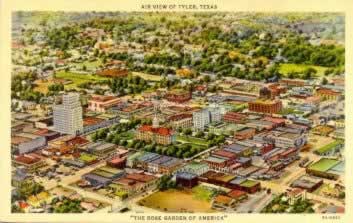 |
The History of Tyler, Texas
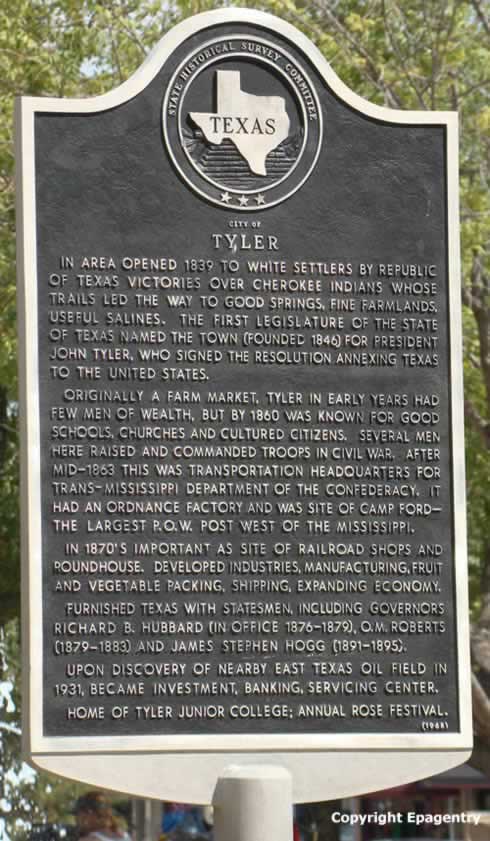
Named for President John Tyler, the city was established on April 11, 1846 by the Texas Legislature as it also created Smith County. Tyler was designated the county seat.
A site was selected for the new town at the center of the county. Tyler has an elevation of about 544 feet, and is positioned about half-way between Dallas and Shreveport.
The county is named after General James Smith, a soldier, planter and politician originally from Spartanburg County, South Carolina.
Smith represented Rusk County in the Texas House of Representatives during 1846-47. When Smith County was organized, it was named in his honor. Smith, who died in 1855, is recognized with a granite historic marker and plaque on Texas Highway 64 just west of Tyler.
The rapidly growing Tyler was later incorporated in 1850, when the county already had a population of over 4,000 residents.
Farming grew quickly as farms thrived on the rich soil, and led to Tyler becoming a major commercial center of East Texas.
Railroad History in Tyler
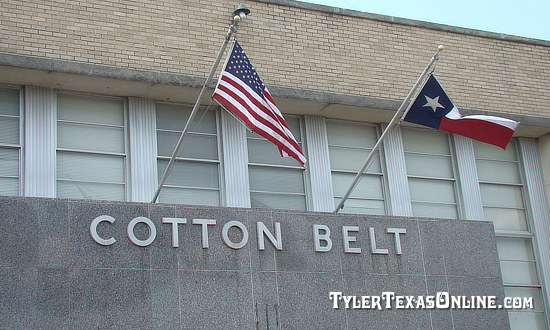 The Cotton Belt Building which housed the general offices of the St. Louis Southwestern Railway,
1517 West Front Street, Tyler, Texas
(Tyler Texas Online Staff Photo) The Cotton Belt Building which housed the general offices of the St. Louis Southwestern Railway,
1517 West Front Street, Tyler, Texas
(Tyler Texas Online Staff Photo) |
In the late 1800s, the railroad became another key element in the local economy. The Tyler Tap Railroad, later renamed the Texas & St. Louis Railway, was chartered in 1871 by a special act of the Twelfth Texas Legislature.
It later evolved into the St. Louis Southwestern Railway, commonly known as the Cotton Belt Route. Banks were formed, and commerce grew, and cotton became the main commercial crop.
Also, learn more about the Cotton Belt south of Tyler, and the history of Tyler-Gresham-Flint-Bullard Cotton Belt line, and the communities of Gresham, Flint and Bullard.

The Rose Industry
Tyler became a city in 1907 when it was approaching a census of about 10,000 people. Truck farms and fruit orchards were an important part of the local economy.
However, a blight decimated much of the fruit industry, and by 1920 the rose growing industry had gained a major foothold in the area, and led to the creation of the world-renown Texas Rose Festival.
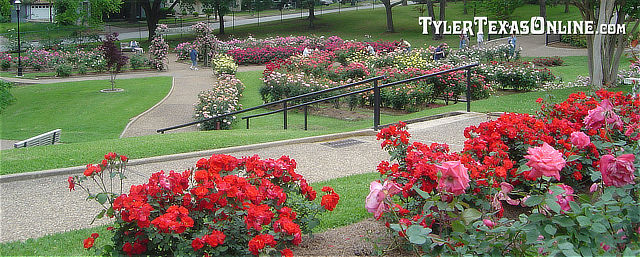
The historic Tyler Rose Garden is one of 24 All American Rose Selection (AARS) test gardens in the country, and also includes a unique Idea Garden created and maintained by the Smith County Master Gardeners.
Oil and Gas
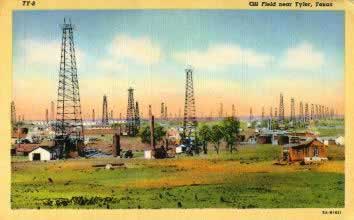 |
Another major economic stimulus arose in the early 1930s with the discovery of oil in East Texas at the Daisy-Bradford No. 3 near Joinerville and Kilgore.
Many oil companies opened facilities in Tyler, pushing the population to near 30,000 by the 1940.
History of Tyler Pounds Airport
Tyler's airport was dedicated on June 28, 1930 as Tyler Municipal Airport. Delta began airmail service in 1934, between Dallas and Monroe Louisiana, via Tyler and Shreveport.
During World War II, it was renamed in honor of Lt. Jack W. Pounds. At the end of the war, in November 1945, the airfield was returned to civilian use under the control of the City of Tyler, and renamed Tyler Pounds Regional Airport.
WWII and Beyond
World War II saw the creation of Camp Fannin northeast of Tyler.
Post-war Tyler gradually changed, and emerged, into the leading manufacturing, commercial, agricultural, and retail center of East Texas, in addition to its base in the oil, gas, and chemical industries. Tyler also became the home of numerous highly-respected educational institutions, including the University of Texas at Tyler, Tyler Junior College, and Texas College.
According to the Federal 2020 Census, the population of Tyler is 105,995, and the population of Smith County is 233,479.
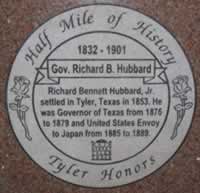 Tyler Half Mile of History ... plaque honoring Texas Governor Richard B. Hubbard |
Tyler Half Mile of History
Much of Tyler's history is being chonicled in the Half Mile of History, which pays tribute to people, places and events that have contributed to the history of Tyler and Smith County.
The Half Mile of History is a permanent, outdoor, half-mile loop surrounding the courthouse square in downtown Tyler, administered by the City of Tyler.
Read about one of the people on the loop ... Walter E. Stewart.
Tyler Texas Vintage Historic Postcards
Postcards represent another media that enables us to visualize, and remember, the past.
 |
We have only a relative small number in our private collection, and these are shown in the pages of the Tyler Texas Vintage Postcard Collection .
We have also purchased, and highly recommend, Robert Reed's book entitled "Images of America: Tyler", published by Arcadia Publishing, available in many local Tyler stores, bookstores and major online book sources.
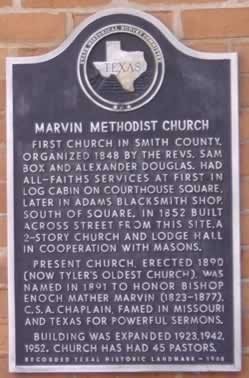 Marvin Methodist Church Historic Marker |
Additional History Resources of Interest
Bonner-Whitaker-McClendon House Historic Estate
Smith County Historical Society
Historic Tyler, Inc.
Heart of Tyler Main Street Program
National Register of Historic Places - Smith County Sites
Texas African American Museum
Tyler History (City of Tyler)
Camp Ford Historical Association
Preservation Texas
Texas State Preservation Board
East Texas Historical Association
Camp Fannin
Airplanes Online
The site of the old Smith County Texas courthouse, looking east to the "new" courthouse
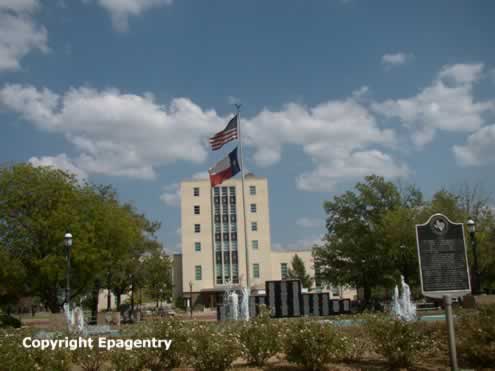
Tyler Texas historical survey marker in the downtown square
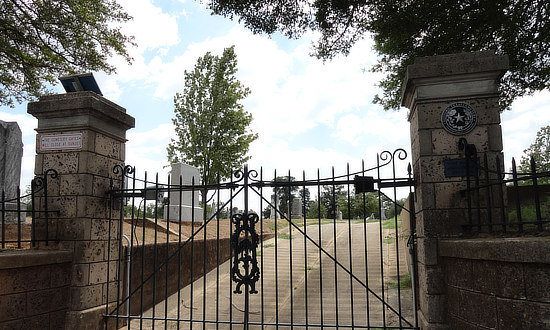
Oakwood Cemetery, the oldest cemetery in Tyler, dating to about 1846,
located just west of downtown Tyler
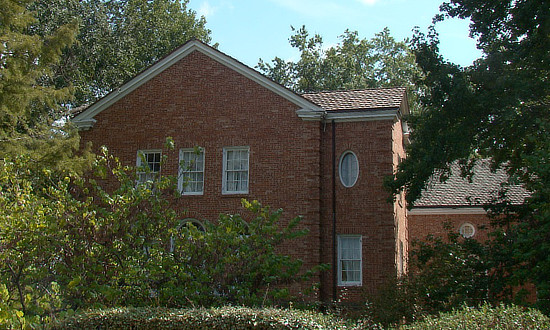
Shown in the photo below is the Woman's Building, South Broadway Avenue, Tyler, Texas, built in 1932.
In September of 2016, the Tyler Woman’s Building Inc. Board of Directors gave to the United Way of Smith County the deed and keys to the historic, 84-year-old structure.