|
We love watching hummingbirds, and East Texas is a great place for that pastime!
The hummingbird population at the end of last year's Texas migration in September of 2011 was awesome, as the hummers made their southbound migration towards South Texas. Shown below is a YouTube video of hummingbird mania in Tyler during that month.
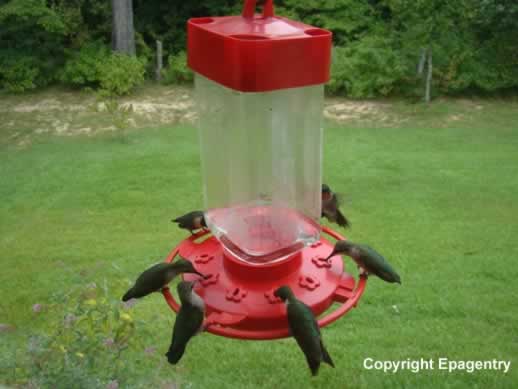
We often have over 40 Ruby Throat hummingbirds on our feeders at one time. At times we are also blessed with several brightly colored Baltimore Orioles on our feeders (see photo of the Oriole below).
Hummingbirds spend the winter in Central America or Mexico, and migrate north to their breeding grounds in the southern U.S. as early as February, and to areas further north later in the spring. The first arrivals in spring are usually males.
Although there are differing views in the birding community as to what triggers the start of migration, it is generally thought that hummingbirds sense changes in daylight duration, and changes in the abundance of flowers, nectar and insects. Instinct also plays a role in making the decision to migrate.
2012 Tyler Texas Hummingbird watch!
First sighting this year in Tyler was March 18, 2012
|
During migration, a hummingbird's heart beats up to 1,260 times a minute, and its wings flap 15 to 80 times a second. To support this high energy level, a hummingbird will typically gain 25-40% of their body weight before they start migration in order to make the long trek over land, and water. They fly alone, often on the same path they have flown earlier in their life, and fly low, just above tree tops or water.
Flying low allows the birds to see, and stop at, food supplies along the way. They are also experts are using tail winds to help reach their destination faster and by consuming less energy and body fat. Research indicates a hummingbird can travel as much as 23 miles in one day.
By August and September, hummingbirds are moving south, refueling their bodies in the early morning, traveling midday, and foraging again in the late afternoon to maintain their body weight. They eventually gather in Florida, Louisiana and along the South Texas coast in preparation for the final push to the south, either over the Gulf of Mexico or via an overland route through Mexico.
Our first hummers usually arrive here in East Texas in early-April, when we see 1-2 at a time. By mid-May, the numbers increase to 6-8 at a time.
August brings lots of activity, when we have 10-20 birds at a time, with peak numbers in early September when we typically spot as many as 25-40 hummingbirds at a time. Most are Ruby Throats, with an occasional Rufous in the mix at the feeders.
We also enjoy hummingbird gardening, and designing our landscape to provide food and shelter for hummingbirds, and butterflies.
Our landscape includes several types of Lantana, Zinnias, Butterfly Bushes, Pentas, and Milkweed.
We grow other hummingbird and butterfly-friendly plants, annuals and perennials such as Goldflame Honeysuckle, Passion Vine, Cross Vine, Weigla, Mexican Firebush, Batface Cuphea, Lipstick Salvia, Hot Lips, and more.
Some of our feeders we put at eye-level, nestled in the flowers. If you don't have pets, or a problem with racoons, this can enhance your hummingbird viewing, and it puts the feeder more in a natural environment for the birds.
We also have an abundance of trees nearby which provide shelter and protection for the hummingbirds.
Shown here are a few quick favorites of some recent sightings ... we'll get more posted from our archives shortly ... so visit again soon.
Hummingbird feeding mania near Tyler Texas

Texas Ruby Throat fall migration in 2011 ... Watch the video on YouTube
Texas Hummingbird frenzy in 2008 ... Watch the video on YouTube
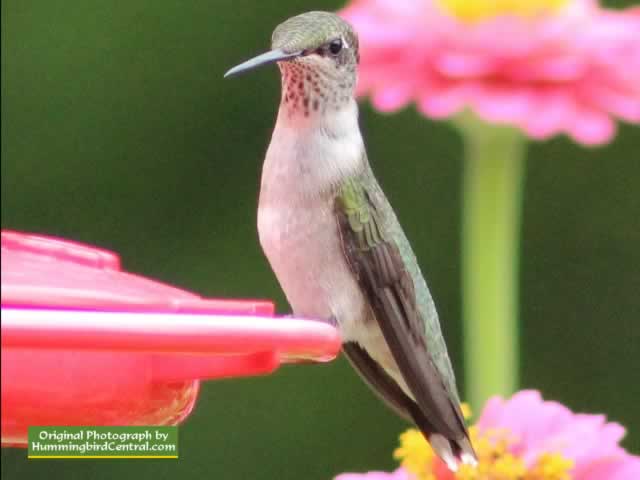
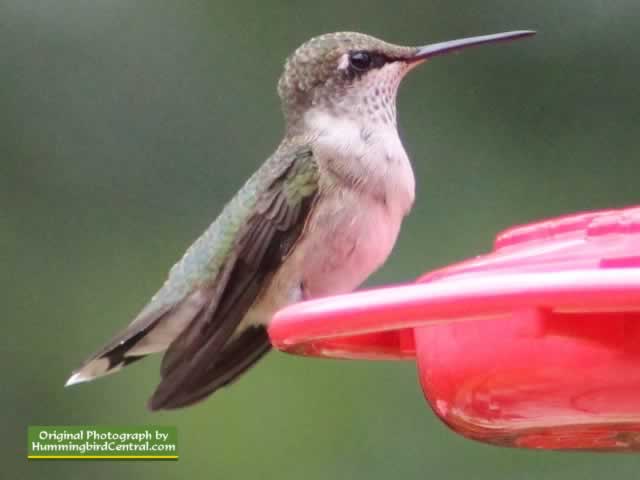
Hummingbird at rest, near Tyler Texas

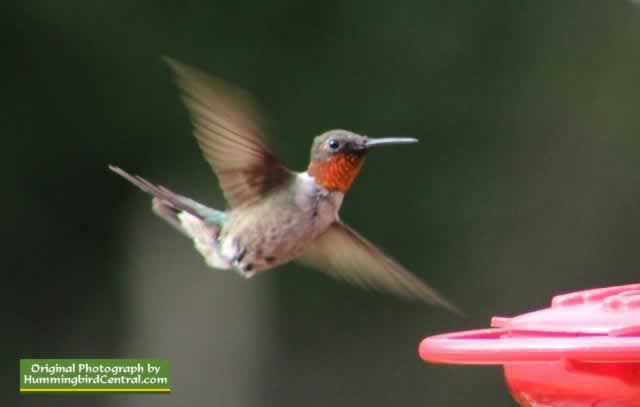
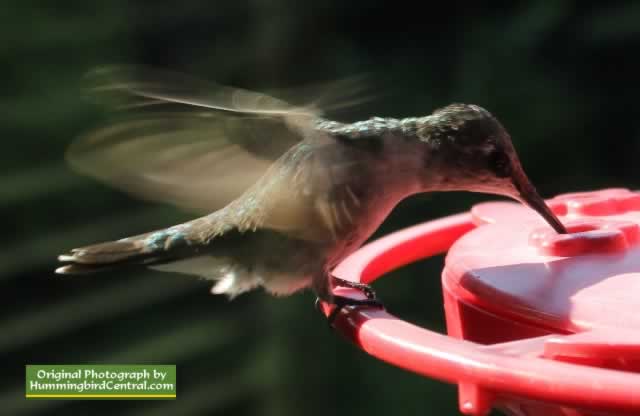
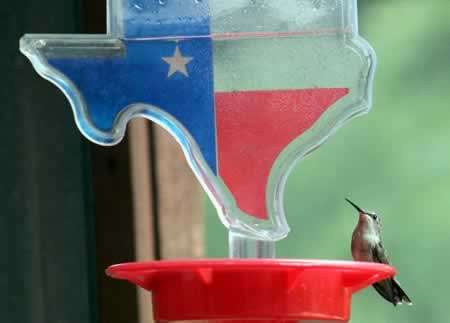
Hummingbird feeding at Tyler Texas

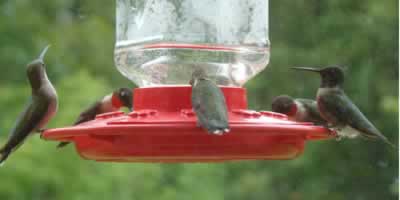
Group of Ruby Throat Hummingbirds at feeder - East Texas

Hummingbirds hovering at feeder in Texas

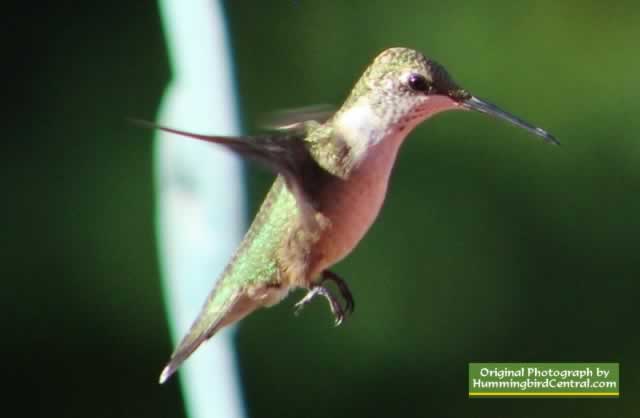
Texas Ruby Throat Hummingbird close-up

Close-up photo of Ruby Throat Hummingbird's head in Texas

Baltimore Oriole on hummingbird feeder in Tyler Texas

Ruby Throat Hummingbird on Oriole feeder in Tyler Texas

Green Anole Lizard on hummingbird feeder in Texas

Texas hummingbird garden with low-hanging feeder
A good solution if you have no pets, or racoons! Put the feeders at eye-level
for the enjoyment of the hummingbirds, and you!

Another hummingbird garden in Texas using low-hanging feeder

Hummingbird feeder nestled in a Butterfly Bush ... the hummers love it!

For our supplies, we often visit Rubicon International on Highway 155 just south of Tyler.
Rubicon also offers periodic classes on owls, bluebirds, hummingbirds, and bird photography. We've attended the classes, and highly recommend these learning experiences from noted Texas birding experts. We've enjoyed conferences there given by Clifford Shackleford, the author of the widely distributed and well known book "Hummingbirds of Texas".
|